complexeva
Fast, low-memory complexity measures for 1D time series (EEG, MEG, physiology).
pip install complexeva # Python 3.14+
import numpy
import complexeva

signal = numpy.random.randn(1000)   # one signal, shape (time,)
complexeva.hfd(signal)              # one float
batches
Pass every signal at once with time on the last axis; you get one value per signal, in the shape of the other axes. Each value is identical to calling the measure on that signal alone.
eeg = numpy.random.randn(64, 1000)              # (channels, time)
complexeva.hfd(eeg)                             # shape (64,)

study = numpy.random.randn(20, 64, 1000)        # (subjects, channels, time)
complexeva.sample_entropy(study)                # shape (20, 64)

recording = numpy.random.randn(1000, 64)        # time first? put time last
complexeva.dfa(recording.T)                     # shape (64,)

windows = numpy.lib.stride_tricks.sliding_window_view(signal, 200)[::10]  # (windows, 200), no copy
complexeva.permutation_entropy(windows)         # one value per window
Batches work for every measure except lyapunov_exponent, compression_complexity, the _hilbert variants and binary-string lempel_ziv, which take one signal. multiscale_entropy adds a last axis of scales, and hjorth returns a (mobility, complexity) pair of arrays. A non-finite sample raises an error naming its full index; a constant signal gives NaN in its place. NUMBA_NUM_THREADS limits the threads.
measures
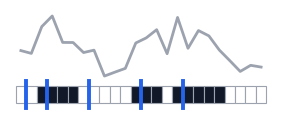
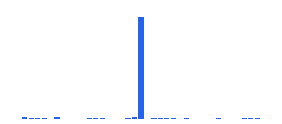
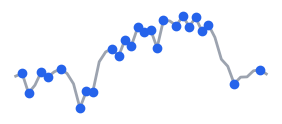
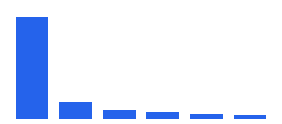
measure |
input |
paper |
|
|---|---|---|---|
|
sample entropy |
||
|
approximate entropy |
||
|
correlation dimension |
||
|
detrended fluctuation analysis |
||
|
permutation entropy |
||
|
largest Lyapunov exponent |
||
|
multiscale entropy |
Costa 2002 |
|
|
Higuchi fractal dimension |
||
|
Hjorth mobility and complexity |
||
|
compression complexity |
||
|
fuzzy entropy |
||
|
Katz fractal dimension |
||
|
Lempel–Ziv complexity |
||
|
spectral entropy |
||
|
Petrosian fractal dimension |
||
|
SVD entropy |




















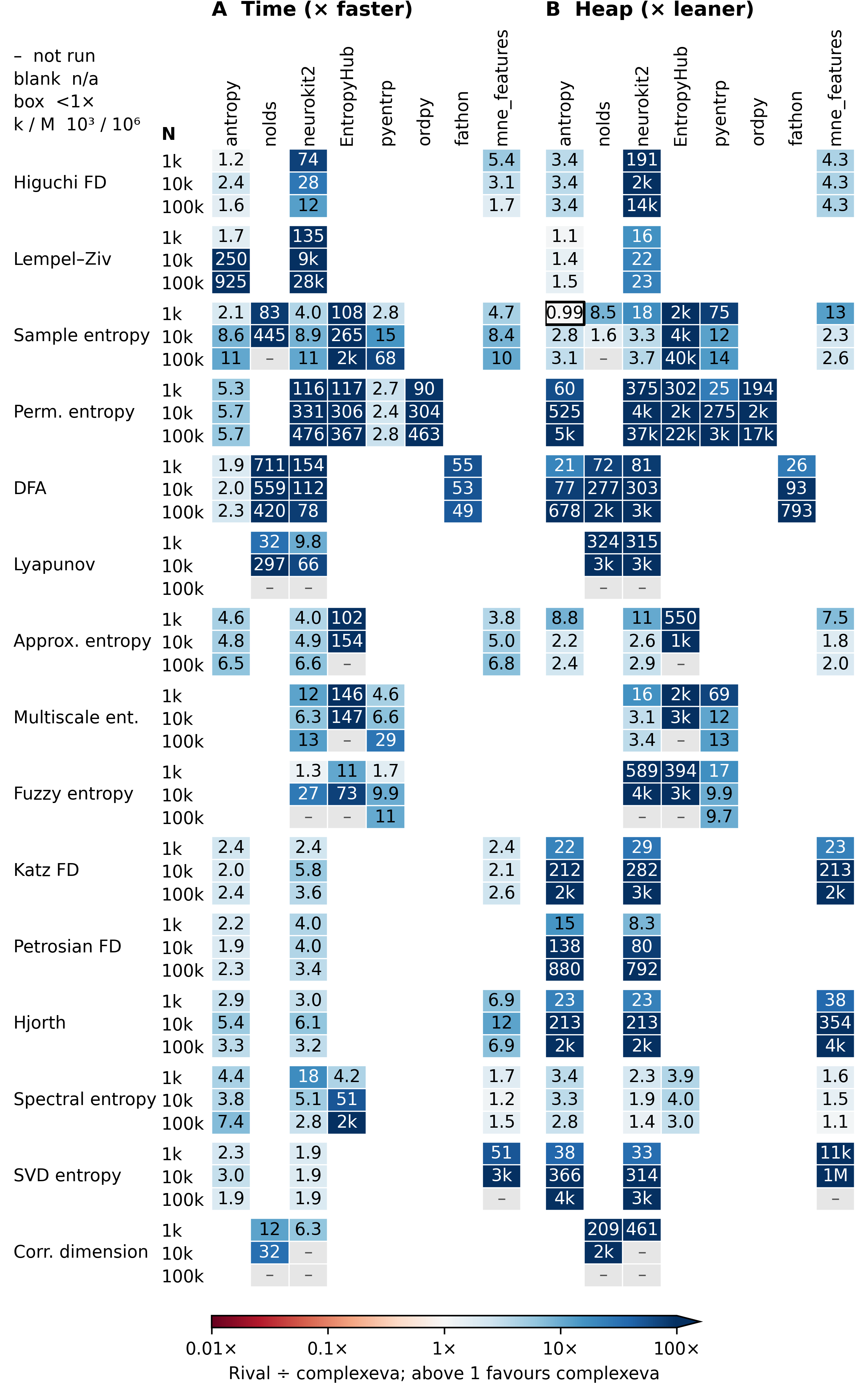
speed and memory vs other packages
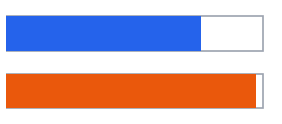
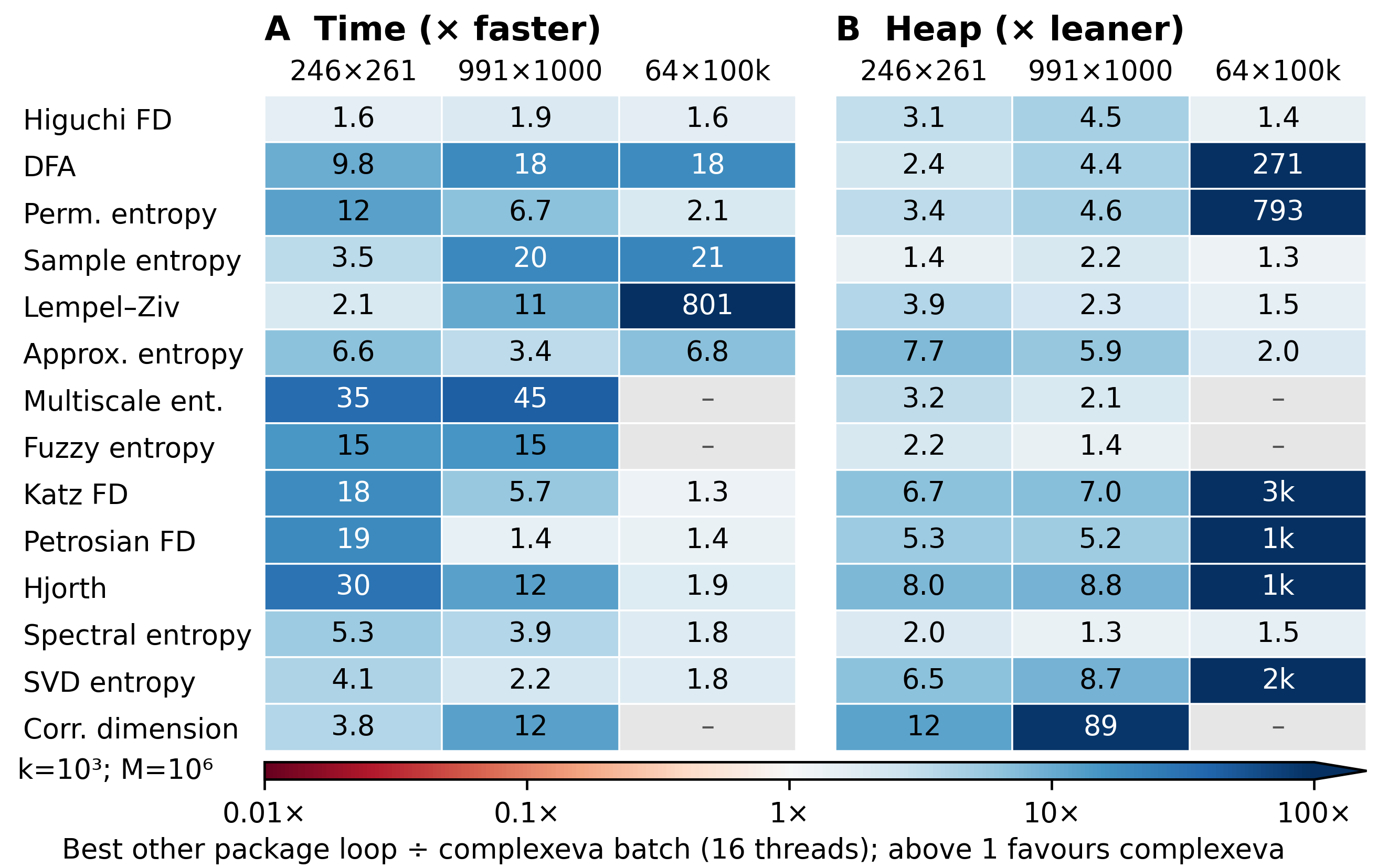
Batches, against a loop of the best other package (NUMBA_NUM_THREADS sets the thread count):
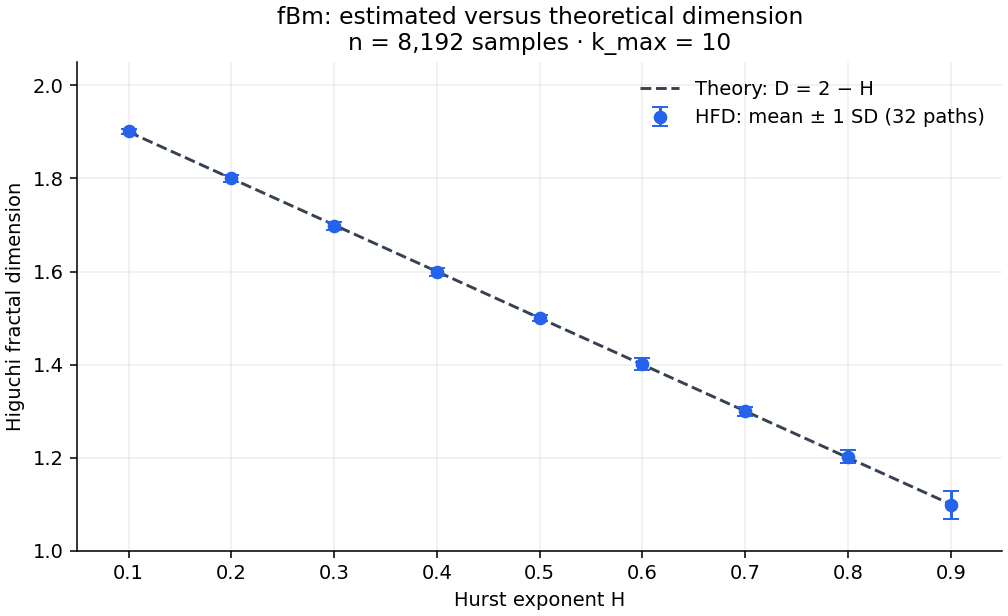
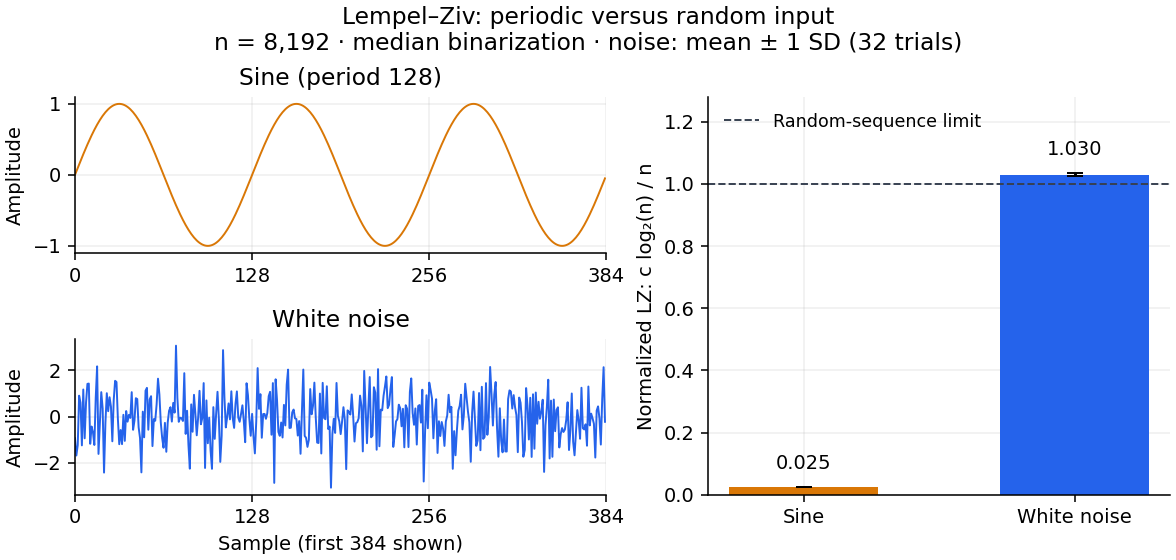
validation
licence
MIT